She did everything recovery is supposed to be. The quiet weekend. The meditation app. The early nights, the herbal tea, the phone in the other room. It left her restless and strangely flatter, like a radio between stations. Then one Saturday she spent four hours clearing out the garden — sweating, absorbed, filthy — and came back more restored than the whole quiet month had made her.
The advice wasn’t wrong for everyone. It was wrong for her.
You tried stillness, it made you worse, and you concluded the problem was you.
That conclusion is the most common wound this episode is for. In episode five I wrote about how far down you are. This letter is about what you rebuild with once you’re stable enough to rebuild — the material of recovery. Almost everyone is working with a wrong picture of what that material is.
Restoration is not rest
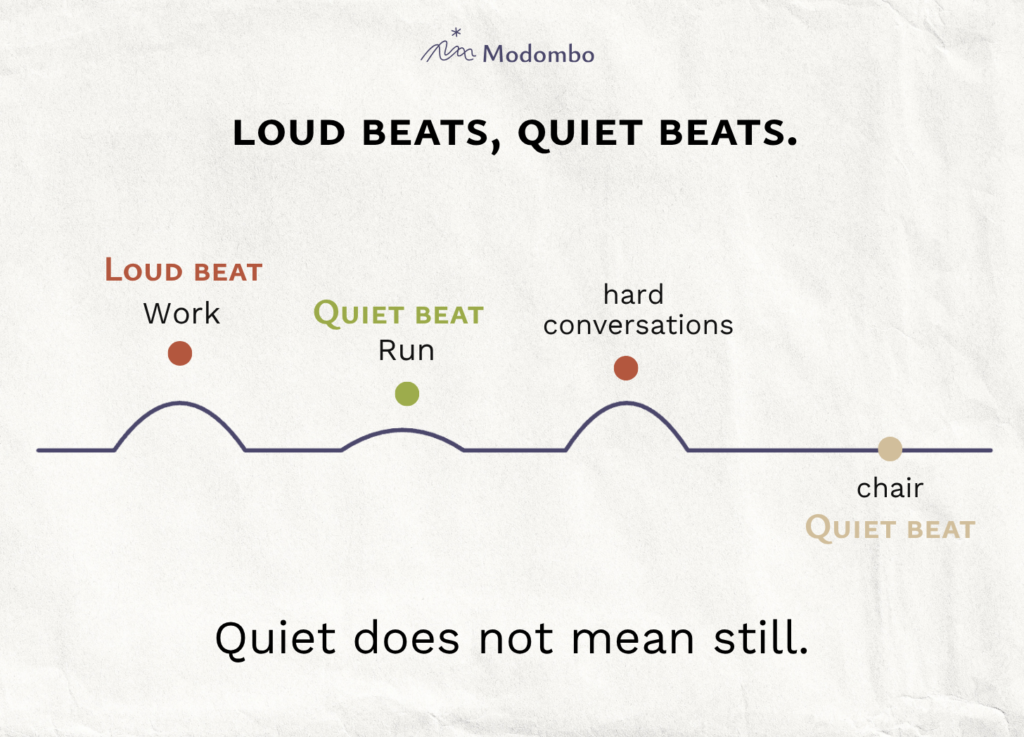
Restoration is whatever genuinely completes the cycle — for you. For some people that is stillness, and stillness saves them. For others the restorative thing is active, even effortful: the run, the garden, the absorbing side project, the hard conversation that finally clears the air. A carpenter I know gets more peace from a long evening of craft than from any evening of scrolling. The immersion gives back what the inbox takes. Sometimes the thing that restores you is a run, not a nap.
This kills a lazy idea that has quietly ruined a lot of recoveries: that recovering means doing less. Doing less is one texture of restoration. It is not the definition. The definition is the cycle completing: effort, then return, in whatever form your system actually returns.
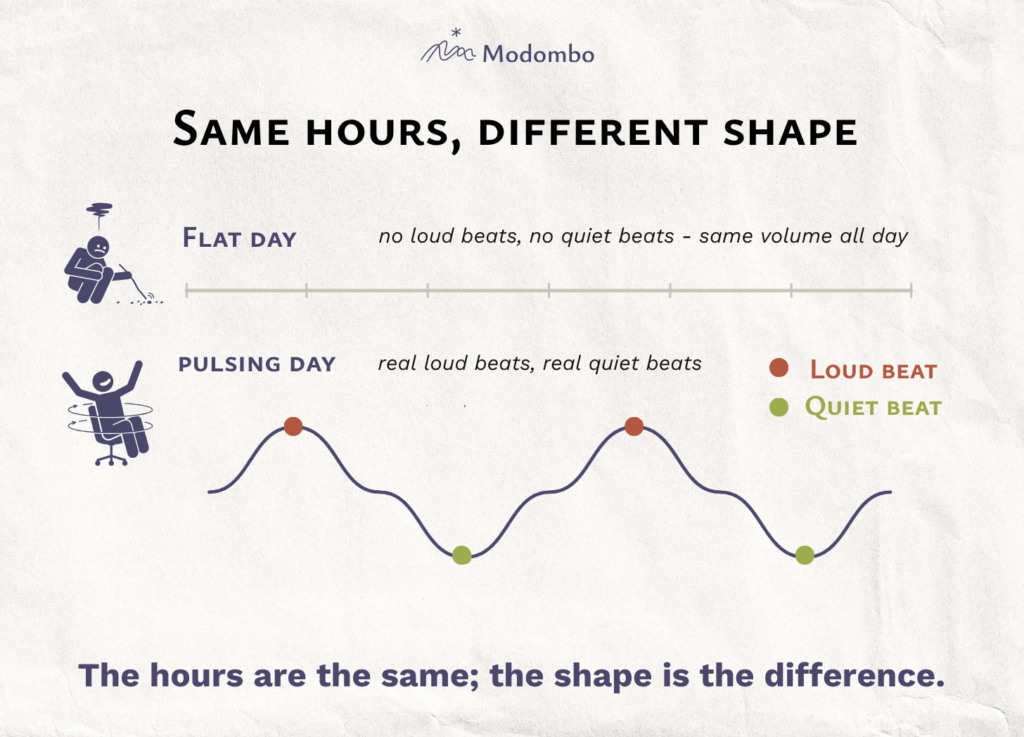
I have written before that rhythm works where balance fails — that people need a pulse, not balance. This letter goes one level deeper: a pulse is made of loud beats and quiet beats, and the quiet beat does not have to be stillness. It has to be yours.
The three threads
Restoration has a weave, and it is made of three threads. When someone rests and rests and nothing comes back, usually one specific thread is broken — and they are repairing a different one.
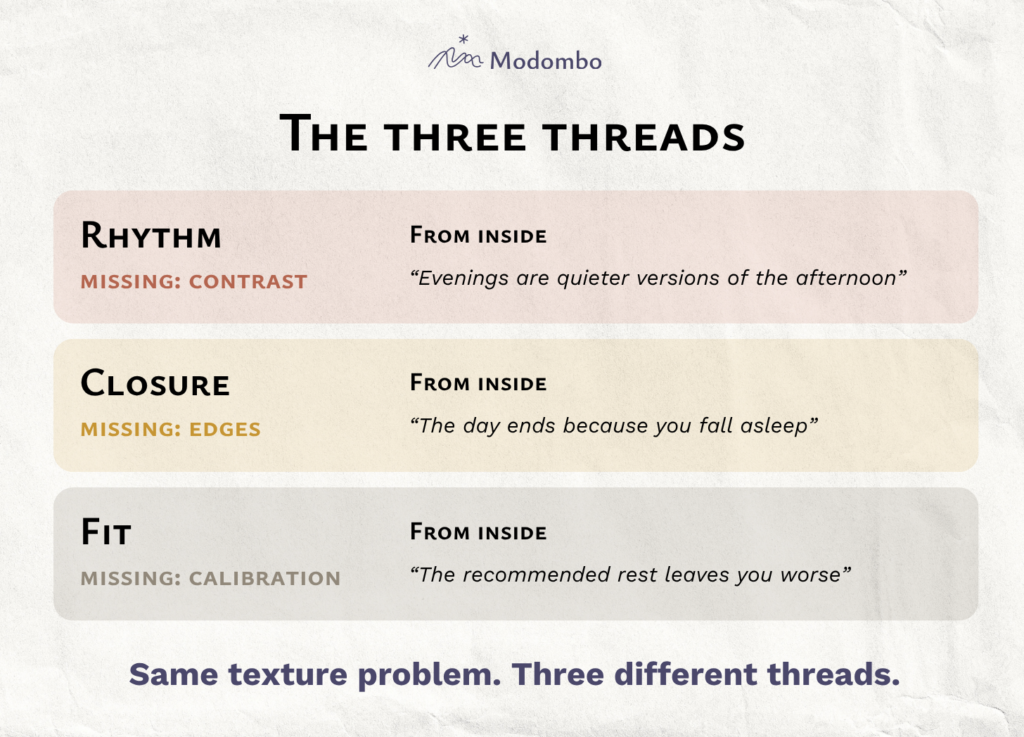
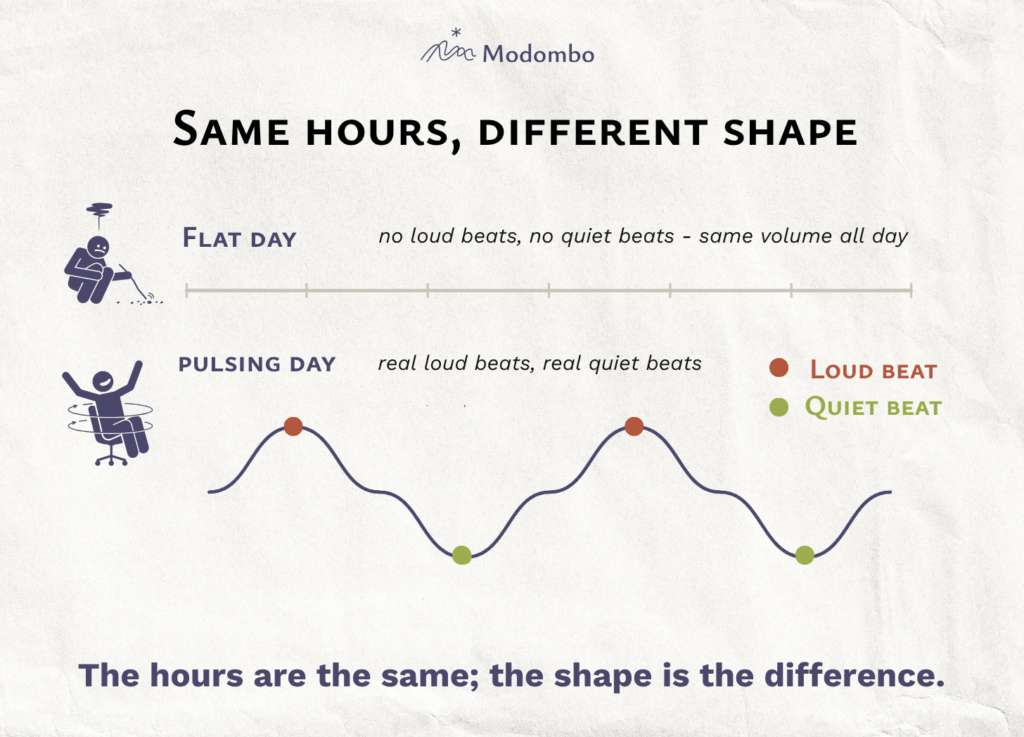
Rhythm. The first thread is oscillation: real loud beats and real quiet beats, full engagement and then true return, instead of the flat always-on line. From inside, a broken rhythm feels like this: the day has no shape. Not overworked exactly, just never not working; evenings are quieter versions of the afternoon with the same tabs open. The tiredness is even and weatherlike. What’s missing is not rest. It’s contrast.
The trap runs in both directions. The absorbing work you love can eat the quiet beats precisely because it’s absorbing. You don’t need more hours to fix this; the flat line and the pulsing line contain the same hours. What changes is the shape.
Closure. The second thread is edges — things that genuinely end. From inside, broken closure feels like this: the day ends because you fall asleep, not because anything finished. The mind keeps a tab open for everything; lying down is when the tabs get loudest. All day, the schedule holds those tabs down — there is always a next demand to answer, so the unfinished things wait. The moment you lie down is the first minute of the day that nothing is asked of you, and everything unfinished asks at once. Holidays take three days to arrive in, because nothing was closed before leaving.
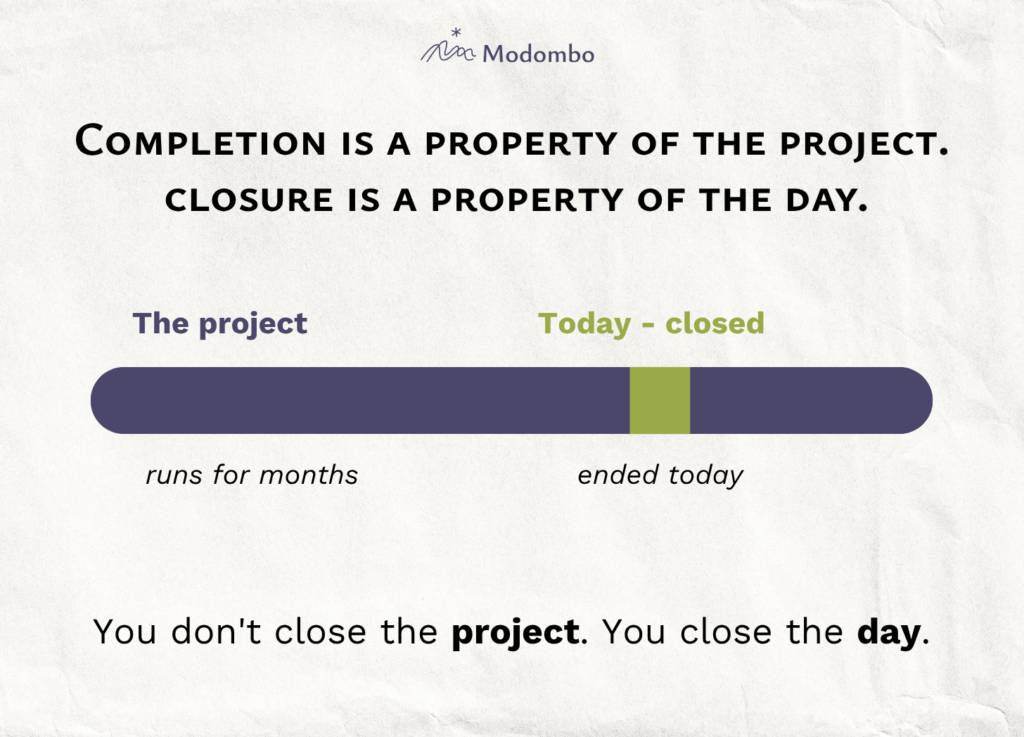
Here is the objection I hear immediately, and it deserves a straight answer: my project doesn’t end. It runs for months. What exactly am I supposed to close? The answer is that you’ve fused two different things. Completion is a property of the project. Closure is a property of the day. On a long project, completion is simply unavailable. A mind that requires completion before it lets go will keep every tab open for months. But your nervous system doesn’t need the project finished to down-regulate. It needs a credible signal that nothing more happens today.
A developer stops mid-feature, writes two lines — stopped at the failing test, next step is the mock — and the evening actually arrives, because the tab is saved, not abandoned. A founder’s fundraise can’t close for months; her Tuesday can: one investor conversation prepared, held, ended. Something ended today, even though the project didn’t. You do not close the project. You close the day.
Fit. The third thread is calibration: restoration matched to your wiring. From inside, broken fit feels like this: you do the recommended things, the bath, the app, the quiet Sunday, and come out restless, itchy, or flatter than before. Meanwhile the thing that actually restores you — the run, the loud dinner, the garage project — has been filed under “more effort” and rationed away.
The same evening that restores one person floods another and bores a third into their phone. An ADHD nervous system tends to recover on the right kind of more: something engaging enough to organise the restlessness; blankness reads as punishment. A highly sensitive one recovers on the right kind of less: genuine low input, which the world keeps helpfully filling with pleasant noise. I’ll give each of these wirings its own full letter after this series closes.
For now, the principle that matters: rest that does not fit your wiring is just more demand. The right energy in the wrong connector charges nothing.
The trap that looks like doing it right
The most common way this episode’s ideas go wrong is that recovery becomes another performance project. Marta’s therapist suggested two evenings off a week. Within days she had built an hour-by-hour recovery schedule, habit trackers, performance metrics for relaxation. Her evenings felt like work projects — because they were. The performer who got her overloaded had simply been put in charge of the recovery. Recovery, graded weekly, attendance mandatory.
A quiet beat you have to perform is just another loud beat. The plan listened to itself and not to her — and a system being managed is not a system being restored. The same wiring that over-structures also rushes: the first week of feeling better taken as permission to re-load, and six weeks later the insomnia is back. Feeling better is the signal to stabilise, not to accelerate.
And one thread runs under all of this: restoration only works when you have a say in it. The scheduled relaxation someone else controls, the mandated wellness hour, the holiday at the in-laws’ pace: all of it restores almost nothing, because a nervous system does not down-regulate on command inside someone else’s structure. Hold that thought; it becomes the centre of the letter after next.
Not what you enjoy. What you came back different from.
People are surprisingly bad at knowing what restores them. Partly because the inner compass has been overridden for years — the signals are quiet and the schedule is loud. And partly because preference is contaminated by image: we pick the restoration that sounds like the person we want to be. The candlelit bath, the fishing trip, the meditation cushion — chosen by identity, not by evidence.
The honest question is not what do I enjoy. It is: after which moments, in the last year, did I actually come back different? Quieter in the chest, more present, capacity returned. That answer is in your record, not your self-image — and it is allowed to be embarrassing. If the truth is that you come back different from a loud dinner and not from the yoga mat, that is your texture. Take it.
I know how embarrassing the record can be, because mine was. As a child, I was pushed into garden and house work, and I hated it. For years it lived in my head as pure obligation, my parents’ idea of a useful son. Then came the startup years and their burnout, and later the management years and theirs. And the thing that reliably brought my energy back was exactly what I had sworn off: a garden project — building a swing for the kids, laying out a barbecue corner — or even plain maintenance around the house. My preference said never again. My record said this is where you come back. The record won.
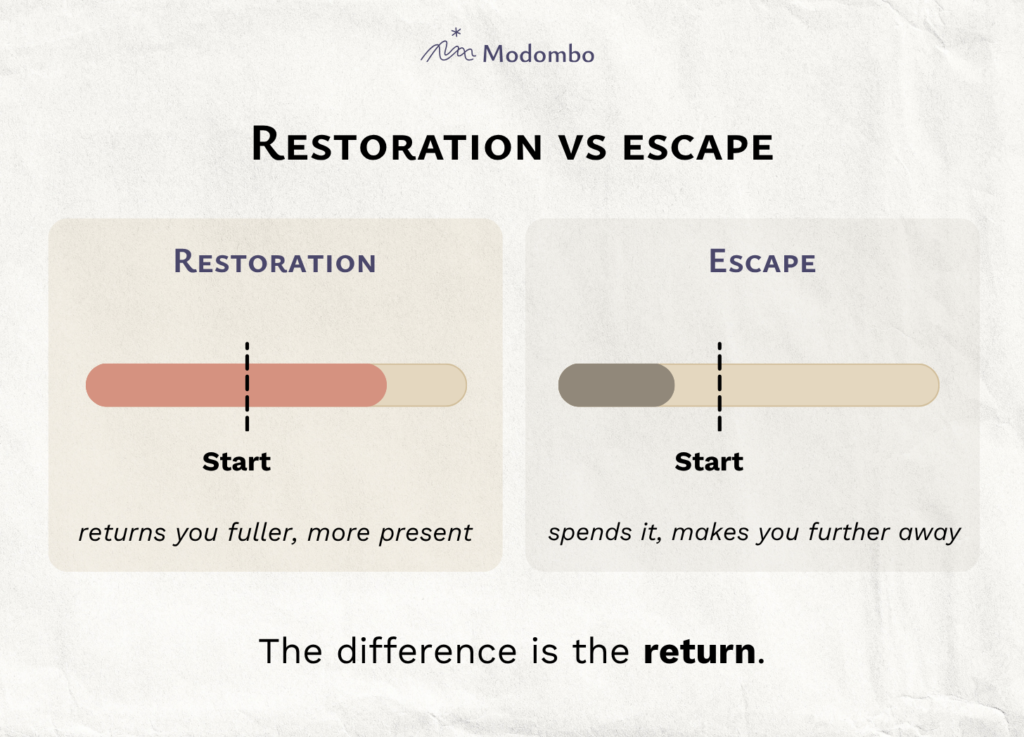
One boundary keeps this honest: restoration is not escape. From outside, they can look identical — both can have a heart rate. The difference is the return. Restoration gives capacity back and leaves you more present; escape spends it and leaves you further away. The run you return from is restoration. The run you disappear into is a message.
And one protection, said once, clearly: if nothing on your honest list produces return — if even the things that used to work give nothing back — that is not a texture problem. That is the worn converter from episode two, or the depth question from episode five. Go back there first. This episode is for texture; it cannot fix machinery.
Three questions to locate yourself:
- When did you last come back from something genuinely different — and was it quiet, or was it effort?
- Does your day end because something ends, or because you fall asleep?
- If you had a free hour right now, would you know what to do with it — or would you fill it with a quieter version of work?
Unlock the full episode in my Substack.