This is an archive version. For all new articles, extended editions, and full resources, visit my newsletter on Substack.
—
What it’s about
When you don’t feel well, that’s not strange. What’s strange is how much energy you spend trying to look like you’re fine.
Example story: Klara, a creative freelancer, built her business on optimism and charm. She believed it was her professional duty to always appear upbeat and inspired. She tried to maintain that same smiling energy in her personal life too — with her kids, her friends, even with her demanding and manipulative mother. But under chronic overload, her brightness became a mask. Anxiety began to grow. Irritation crept in. Sleep faded. The more she smiled, the more distant she felt from herself. Her “positive energy” had turned into a full-time performance — and her body was paying the price.
This is where toxic positivity begins: when being okay becomes an expectation, not a feeling.
What’s happening
Overloaded people often mask their overload. They smile in meetings. They keep functioning at home. They seem balanced in public.
Inside, there’s often fatigue, tension, irritation, a quiet sense of failure — and one more hidden layer of pressure: “I can’t be weak.”“I have to look OK.”“I must handle it.”“I don’t want to burden anyone.” That’s how toxic positivity sneaks in. You start treating genuine emotions — sadness, fear, anger, confusion — as enemies to be suppressed.
The result
Your “positive mindset” becomes a form of inner censorship. The smile stays, but it costs energy — and slowly eats away your capacity to feel. You convince yourself that being “fine” is the norm — and everything else means failure.
But that belief only accelerates the fall. The pressure to stay endlessly “OK” doesn’t make you strong — it makes you brittle. You add another layer of strain on top of the original overload. And what began as a coping strategy becomes self-violence.
What now
Sometimes the first real relief comes when you allow yourself not to be OK. When instead of a smile, you simply say:“It’s been too much lately.”
You don’t have to overwhelm others with emotion — but you have every right to say: “I’m not feeling well.”“I’m exhausted.” That’s not weakness — it’s pragmatic self-regulation. Such honesty prevents breakdowns, outbursts, and quiet collapses.
Tip #8
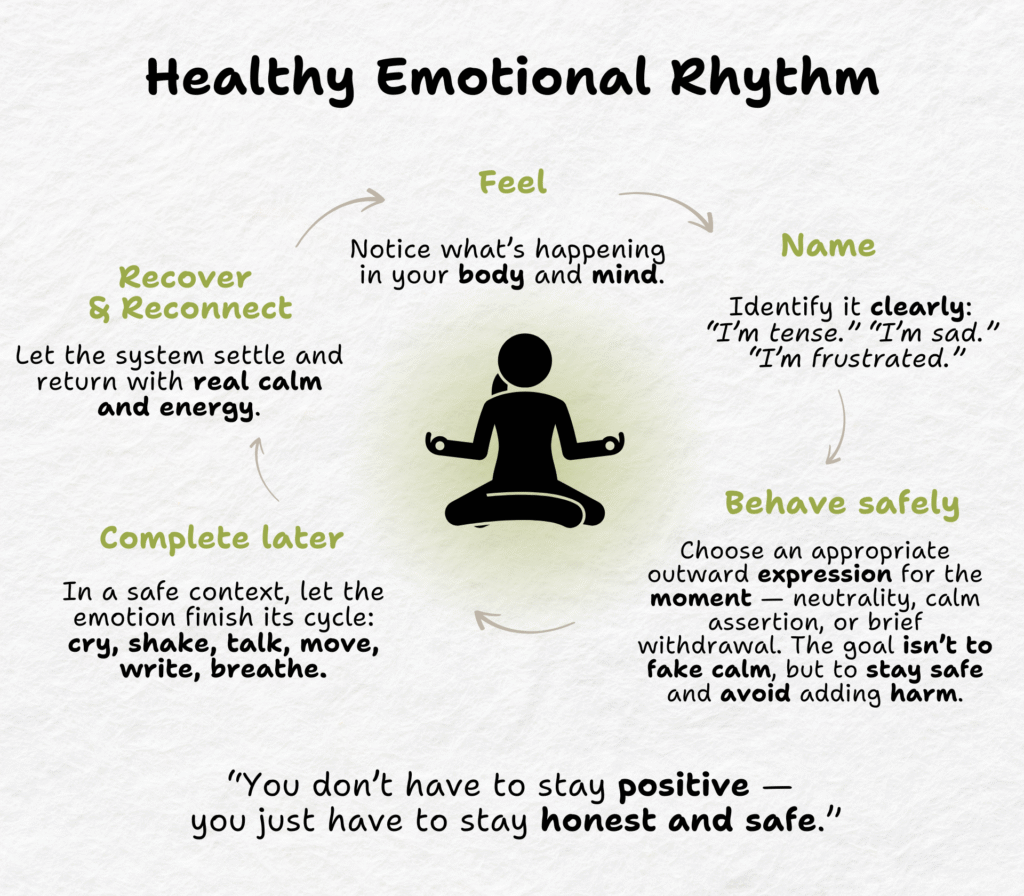
The pressure to appear fine is often a subtle form of inner violence. If you realize you have little or no space where you can be honest about how you feel — create one. Maybe it’s a regular conversation with a close friend who listens without trying to fix things. Maybe it’s therapy. Or maybe it’s ten quiet minutes with yourself — meditating or journaling. You don’t have to share everything everywhere, but you do need a place where the truth of how you feel can safely exist. That’s not a luxury — it’s part of a healthy emotional rhythm.
Personal experience
For years, I performed calm confidence even when I was exhausted. I didn’t share the darker sides of my emotions, and the inner tension grew. The real change began when I started meditating — and later, in psychotherapy, found a space to stop managing my emotions and start meeting them.
Want more?
Subscribe to my newsletter on Substack or follow me here on LinkedIn.