AI is supposed to make work easier. So why do so many competent people feel tense, watchful, and quietly guilty — even on good days?
Last week, I wrote about how AI improves work in all the ways that don’t actually calm a nervous system. Things get faster, smoother, more structured — and at the same time harder to put down. You’re doing less manual effort, but carrying more mental weight. You’re not overwhelmed by chaos, but by competence that never quite lets you relax. Nothing is obviously wrong. Which makes the unease harder to explain, easier to ignore, and much harder to switch off.
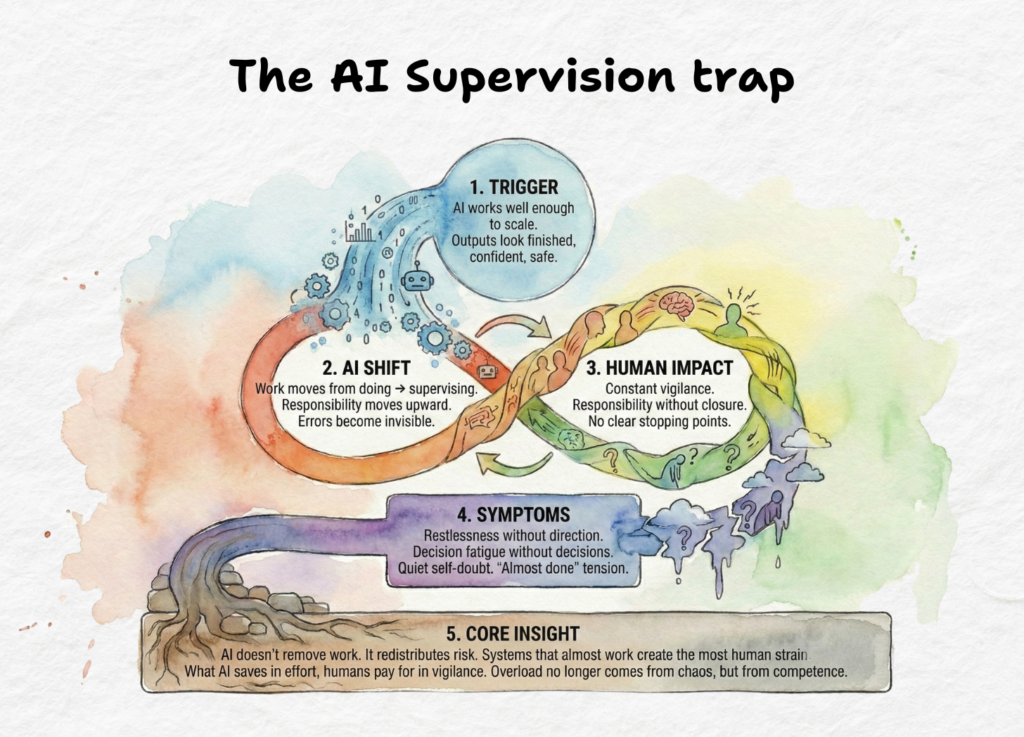
Today, I want to zoom in on the pattern that ties all of this together. I call it the AI supervision trap.
What is AI supervision trap
The AI supervision trap appears when AI works well enough to invite scale, speed, and trust — but not well enough to safely stand alone. Work stops being about doing and becomes about overseeing. People stop acting and start monitoring. Outputs look finished, confident, and clean, while the real burden shifts to humans who must watch for what doesn’t announce itself: hidden assumptions, edge cases, delayed consequences. Nothing feels broken, yet nothing ever fully settles. What I’m starting to hear from people in AI-heavy roles isn’t panic or burnout — it’s a quieter story:
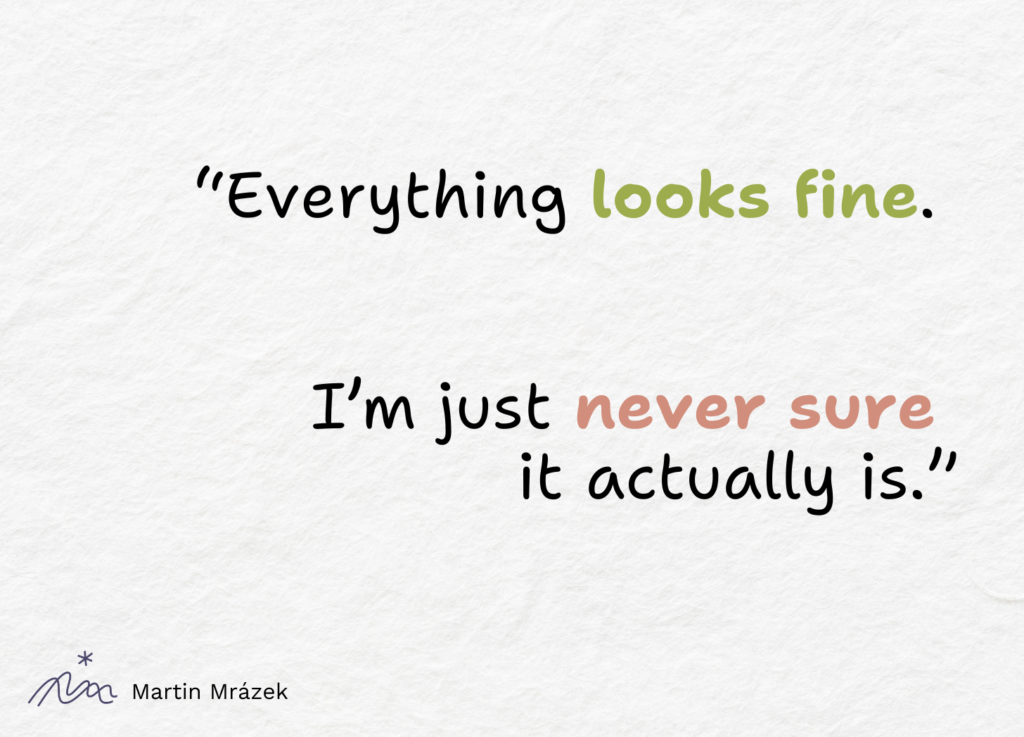
Peter, senior engineer, professional AI failure forecaster
A senior engineer doesn’t get replaced by AI. That would be too clean. Instead, he gets upgraded. Suddenly he’s “overseeing” things. Many things. All at once. Fewer people per project, more projects per week, and AI happily pumping out code that looks gorgeous. Clean. Documented. Confident. Everything works. Which is exactly why he’s nervous.
His job is no longer building systems. It’s staring at things that look finished and thinking: this is going to ruin my life later. Nothing crashes. Tests pass. Dashboards are green. But complex systems don’t explode immediately — they wait. They smile. They fail politely, six months later, in production, at 3 a.m. The engineer lives in a constant state of “almost-sure-but-not-really,” which turns out to be an excellent way to destroy a nervous system.
The real fun part? He’s still responsible. He didn’t write most of it. He didn’t design the whole thing. But when something backfires, everyone looks at him like: “You reviewed it, right?” Try explaining that AI is amazing at simple stuff but becomes a chaos generator once complexity stacks. It sounds theoretical. It sounds defensive. So he nods, approves, and adds another invisible weight to the mental backpack he never takes off.
This is the supervision trap. No drama. No collapse. Just permanent vigilance. He’s not exhausted from working too hard — he’s exhausted from watching reality like a hawk that hasn’t slept in years. AI didn’t steal his job. It just turned competence into a 24/7 background anxiety process, quietly running in his head, even on weekends.
David, senior lawyer, smiling politely at future liability
David used to write contracts. Now he reviews documents that look like they were written by someone who has never been sued before. The language is flawless. The structure is elegant. Every clause is calm, reasonable, and politely confident. Junior lawyers love it. Clients love it. David reads it and feels the ancient legal sensation of this will be Exhibit A one day. Nothing is wrong. Which is exactly how real legal problems begin.
Each clause makes sense in isolation. Together, they form a kind of legal Jenga tower that looks stable until time, jurisdiction, or a creative opposing counsel breathes on it. AI doesn’t feel precedent. It doesn’t feel where liability likes to hide. It doesn’t get that one “harmless” sentence can quietly transfer risk into the future like a gift nobody asked for. David’s job is no longer drafting law — it’s doing the same anticipatory thinking as always, just faster, across ten times more documents, with far less time for judgment to actually settle.
David had a say in the deal — just not enough time to fully inhabit the consequences before the next “final” draft arrived. Explaining that AI is fantastic for simple contracts but becomes genuinely dangerous at real complexity sounds theoretical, cautious, and deeply unpopular. So he signs off, carries the risk, and practices a very specific kind of gallows humor: the smile of a man who knows that AI didn’t replace him — it just outsourced the anxiety to him personally.
Explain it to your management
At this point, I’m switching to the paid section. Below (on my Substack), I lay out the AI supervision trap in a clear, factual form — distilled into slides and structured notes. These are meant to be used, not just read: to explain what’s happening to senior people in AI-heavy environments, to name risks that are currently invisible, and to support conversations with management, HR, or AI teams about capacity, responsibility, and long-term strain. This is the same pattern you’ve just seen in the stories — now translated into language that organizations can actually work with.
Find the full episode at my Substack.